
Clutter can make your home feel messy and leave you unsure where to start cleaning. From crowded kitchen counters to overflowing closets, too many belongings can make everyday tasks harder.
However, you do not need to clear everything in one day to make a difference. Small steps can help you create more space without feeling overwhelmed. With a few simple habits, you can remove unwanted items, organize the things you use, and keep your home tidy with less effort.
1. Start With One Small Area
Looking at an entire messy room can make decluttering feel like a huge task. Instead of trying to clean everything at once, choose one small area, such as a drawer, shelf, or bedside table.
Remove the items from that area and decide what to keep, donate, or throw away. Once you finish, move on to another small section. This approach helps you see progress without creating a bigger mess throughout the house.
2. Set a Short Timer
You do not need to spend hours decluttering to make progress. Set a timer for 10 to 15 minutes and focus on one task until the time is up.
For example, you could spend 10 minutes sorting bathroom products or 15 minutes clearing a kitchen drawer. Short sessions are easier to fit into a busy day and can help you avoid getting tired.
If you still have energy after the timer ends, you can continue. Otherwise, stop and return to the task another day.
3. Declutter One Item at a Time
Trying to make decisions about dozens of belongings at once can become tiring. Instead, pick up one item at a time and decide whether you still need it.
Ask yourself a few simple questions. Do you use it regularly? Is it in good condition? Does it serve a purpose in your home? If you no longer need it, consider donating, selling, or discarding it.
This method keeps the process simple and helps you avoid moving items from one pile to another without making decisions.
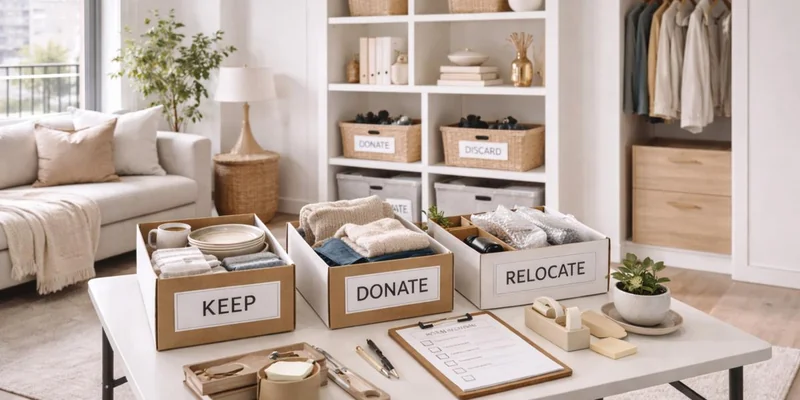
4. Use the Four-Box Method
The four-box method gives you a simple way to sort belongings while decluttering. Take four boxes, baskets, or bags and label them:
- Keep: Items you use or want to keep.
- Donate: Useful items that someone else could use.
- Sell: Items in good condition that have resale value.
- Discard: Broken, damaged, or unusable items that cannot be repaired or reused.
As you go through a space, place each item in the appropriate box. This keeps your decisions organized and prevents unwanted belongings from getting mixed up with things you plan to keep.
Once you finish, put away the items you are keeping and deal with the other boxes promptly.
5. Start With Easy Decisions
Some belongings are easy to remove, while others can take much longer to sort through. Starting with difficult decisions can make the entire process feel stressful.
Begin with things you clearly no longer need, such as expired products, empty packaging, broken household items, and old papers with no useful information.
Leave sentimental belongings, gifts, and items with personal meaning for later. Once you have cleared some space and built momentum, you may find it easier to decide what to do with them.
6. Follow the One-In, One-Out Rule
The one-in, one-out rule helps prevent clutter from building up again. Whenever you bring a new item into your home, remove an existing item of the same type.
For example, if you buy a new shirt, consider donating one you no longer wear. If you purchase a new kitchen utensil, check whether you already have one that can be removed.
You do not have to apply this rule to every item you own. It works especially well for clothes, shoes, kitchenware, books, and other belongings you tend to collect over time.
7. Clear Flat Surfaces First
Tables, countertops, desks, and dressers can quickly become cluttered because they provide convenient places to leave things. Clearing these surfaces can make a room look tidier without requiring a complete reorganization.
Start by removing items that do not belong there. Put away papers, return dishes to the kitchen, and move personal belongings to their proper places.
Keep only the items you use regularly or want to display. You can leave a few decorative pieces on a table or shelf, but avoid filling every available space.
8. Declutter Your Clothes in Small Batches
Clothing can take up a lot of space, especially when closets contain items you rarely wear. However, sorting through every piece of clothing at once can be tiring.
Start with one category, such as shirts, trousers, shoes, or jackets. Keep the items you wear and feel comfortable in. Set aside anything that no longer fits, is damaged beyond repair, or has not been useful for a long time.
You can also create a separate pile for clothes you are unsure about. Revisit those items later instead of forcing yourself to make every decision immediately.
Once you finish, arrange the remaining clothes so they are easy to see and reach.
9. Get Rid of Duplicate Items
It is easy to collect multiple versions of the same household item. You might have several kitchen utensils, water bottles, storage containers, or cleaning tools even though you only use a few.
Check these items and decide how many you actually need. Keep enough to suit your household and daily routine, then donate useful extras or discard damaged ones.
You do not have to remove every duplicate. Extra plates, towels, or utensils may be useful if you have a large family or regularly host guests. The goal is to remove unnecessary items, not make your home less practical.
10. Give Every Item a Home
Clutter often builds up when belongings do not have a specific place to go. Without a clear storage spot, items end up on tables, chairs, countertops, and other available surfaces.
Assign a home to everyday belongings. Keep keys near the entrance, store cleaning products in one designated area, and place chargers where you usually use them.
Choose storage locations that make sense for your routine. Items you use frequently should be easy to reach, while things you rarely need can go on higher shelves or in less accessible storage spaces.
When everything has a place, tidying up becomes easier because you know where each item belongs.
11. Use a Simple Keep-or-Remove Checklist
If you struggle to decide what to do with certain belongings, use a short checklist to guide your choices.
Ask yourself:
- Have I used this item recently?
- Do I need it for a specific purpose?
- Is it in good condition?
- Do I have enough space to store it?
- Would I choose to keep it if I were organizing my home from scratch?
You do not need to answer every question for every item. Use the ones that help you make a clear decision.
If something is useful, meaningful, or necessary, keeping it makes sense. If you have no real use for it and it takes up valuable space, consider letting it go.
12. Deal With Paper Clutter Immediately
Mail, receipts, bills, instruction manuals, and old documents can pile up quickly. If you leave them in random places, they can make desks, drawers, and countertops look messy.
Sort papers into three basic groups: keep, act on, and discard. File important documents, handle bills or forms that need attention, and recycle papers you no longer need.
Be careful with documents containing personal or financial information. Shred them before disposal when appropriate.
You can also reduce future clutter by switching to digital bills and statements when convenient. Keep essential physical documents in labeled folders so you can find them when needed.
13. Declutter Sentimental Items Gradually
Getting rid of sentimental belongings can be harder than removing ordinary household items. Old photographs, gifts, letters, and souvenirs may remind you of important people or experiences.
You do not need to discard these items simply because they take up space. Instead, decide which belongings are most meaningful to you and how much room you can reasonably give them.
Start with a small collection rather than opening every box of keepsakes. You could keep your favorite photographs in an album or store special letters in one box.
For items you want to remember but do not need to keep physically, consider taking photographs of them. This gives you a way to revisit the memories without storing every object.
14. Donate or Remove Unwanted Items Promptly
After sorting your belongings, do not leave unwanted items sitting around for weeks. Donation bags and boxes can become another source of clutter if you forget to deal with them.
Choose a specific day to take donations to a local charity or arrange a pickup if that service is available. You can also offer useful items to friends or family members who need them.
Check that donated belongings are clean and in usable condition. Recycle or dispose of damaged items responsibly when possible.
If you plan to sell something, give yourself a reasonable deadline. If it does not sell, consider another option rather than letting it occupy space indefinitely.
15. Create a Simple Daily Reset Routine
Decluttering becomes easier when you spend a little time maintaining the spaces you have already cleared. A short daily reset can prevent small messes from turning into larger tasks.
Spend five to ten minutes putting things back where they belong. Return dishes to the kitchen, fold blankets, clear frequently used surfaces, and put away items left out during the day.
Focus on the areas that become messy most often. You might need to reset your living room every evening but only organize a guest room occasionally.
Keep the routine simple enough to follow regularly. You do not need to make your home look perfect every day. The aim is to keep clutter under control without spending too much time cleaning.
Final Words
Decluttering does not have to be a stressful or time-consuming task. Starting with small areas, setting short timers, and making simple decisions can help you clear unwanted belongings at a comfortable pace.
Once you have more space, a few daily habits can prevent clutter from returning. You do not need to finish your entire home in one day. Start with one drawer or shelf, build a routine that works for you, and make progress one step at a time.
Frequently Asked Questions (FAQs):
1. Where should I start when decluttering my home?
Start with a small area, such as a drawer, shelf, or countertop. Finish that space before moving on to another area.
2. How can I declutter without feeling overwhelmed?
Break the task into small steps and work for 10 to 15 minutes at a time. Focus on making steady progress instead of finishing everything in one day.
3. What should I do with items I no longer need?
Donate useful items, sell belongings in good condition, and discard things that cannot be reused. Try to remove unwanted items from your home promptly.
4. How often should I declutter my home?
Spend a few minutes each day putting things away and removing unnecessary items. Review larger areas every few weeks or whenever clutter starts to build up.
5. How do I keep my home clutter-free?
Give every item a designated place and return it there after use. Also, avoid bringing home new items you do not need.


Leave a Reply